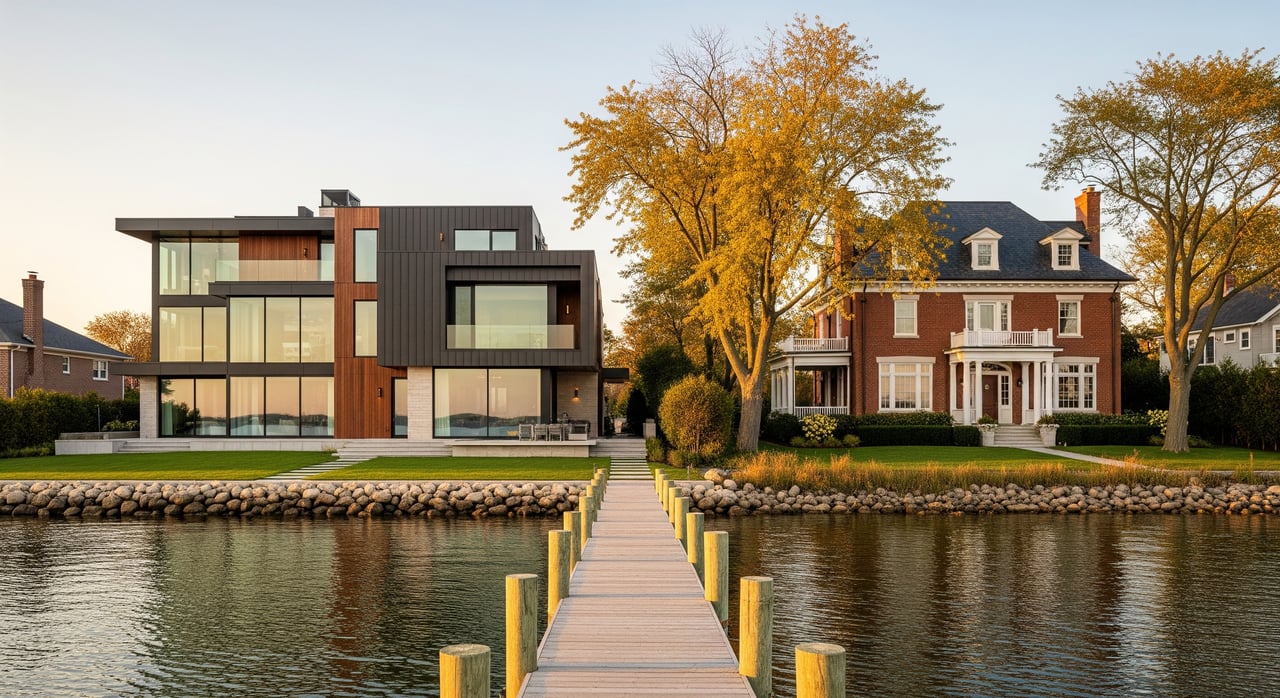
Thinking about building a new home or buying an existing one in St. Clair? It is a big decision with real trade-offs in cost, timing, and lifestyle. You want a home that fits how you live today while making a smart long-term move. In this guide, you will learn how new construction and resale homes compare in St. Clair, what to watch for in contracts and inspections, and how local factors like waterfront lots, assessments, and builder warranties come into play. Let’s dive in.
St. Clair housing at a glance
St. Clair and the greater Blue Water Area offer a mix of choices. You will find older, established neighborhoods and riverfront properties along the St. Clair River and Lake Huron corridor. You will also see newer subdivisions and greenfield lots near the municipal fringe where builders are active. These location and lot differences matter. Waterfront and in-town locations are more likely to be existing homes, while new builds tend to cluster where land is available and infrastructure is expanding. Your decision often starts with where you want to live and how soon you want to be there.
New construction: what you gain
Customization and modern design
With many builders, you can select floor plans, finishes, and certain upgrades if you are early enough in the process. New homes are designed around today’s preferences, with open layouts, modern kitchens and baths, and practical storage. Systems like HVAC and electrical are built to current codes.
Energy efficiency and lower near-term maintenance
Newer insulation, windows, and mechanicals typically reduce utility costs compared with older homes. You also start with a new roof, appliances, and systems, which lowers the odds of major repairs in the first few years.
Builder warranties and incentives
Many builders include limited warranties and a punch list process after closing. Warranties often follow a structure such as short-term workmanship coverage, a defined period for mechanical systems, and longer structural coverage. Incentives can include rate buydowns, closing-cost help, or upgrade packages, depending on the builder and current inventory.
Trade-offs to consider
- Premium pricing: New builds often carry a higher price per square foot due to construction and lot premiums.
- Timeline and uncertainty: Build times can stretch due to weather or change orders, which affects your move-in date.
- Location maturity: New subdivisions may have fewer established trees and amenities at first. Commute patterns and nearby services can evolve as the area grows.
- Appraisals: Unique floor plans and limited comparable sales can create appraisal challenges that need careful documentation.
- Negotiation boundaries: Large production builders often follow set pricing and option lists. Flexibility varies by builder and market.
Existing homes: what you gain
Location, character, and lot maturity
Existing homes often sit in established neighborhoods with mature trees and landscaping. Many are closer to downtown amenities or in sought-after riverfront corridors, where ownership changes hands rather than new construction filling in.
Immediate occupancy and potential savings
You can move soon after closing rather than waiting months for construction. Depending on market conditions, sellers may be more flexible on price or repairs than a builder with fixed pricing.
Predictability and value-add potential
You can see the neighborhood as it is today. Traffic patterns, nearby home conditions, and community character are visible. If you prefer to renovate, well-located properties can offer room for value-add improvements.
Trade-offs to consider
- Maintenance and upgrades: Roofs, electrical, plumbing, and HVAC may need updates. Older homes may be less energy efficient.
- Hidden defects: Water intrusion, foundation movement, or legacy materials can surface during inspections.
- Customization costs: Personalizing a home may require renovations, which adds time and budget.
Quick comparison: new vs. existing
| Factor | New Construction | Existing Home |
|---|---|---|
| Cost structure | Higher price per square foot common; option and lot premiums | Often lower price per square foot; room to negotiate varies |
| Timing | Months to build; subject to weather and selections | Contract to close in weeks, not months |
| Location | Frequently on the edge of town or in new subdivisions | More choices near downtown or along the riverfront |
| Energy and systems | New codes, efficient systems, modern layouts | Varies by age and upgrades; may need improvements |
| Maintenance | Minimal near term; covered by builder warranties | Potential immediate repairs; seller credits may help |
| Negotiation | Often limited; incentives may be available | More flexible on price, terms, or repairs |
| Appraisal | Can be complex if few comps exist | Typically straightforward with local comps |
| Community maturity | Landscaping and amenities develop over time | Established neighborhood character and canopy |
| Warranties | Structured builder coverage; punch list after closing | Optional home warranty from seller; coverage varies |
Financing, inspections, and the fine print
How financing differs
New construction can involve construction-to-permanent loans or builder partner programs. Construction loans often use a draw schedule and interest-only payments during the build. For resale homes, you typically use a standard purchase mortgage. Whether you choose conventional, FHA, or VA financing, make sure your lender is experienced with your chosen path in Michigan and can address appraisal specifics, especially for new builds.
For builder incentives like rate buydowns or closing-cost credits, compare the long-term value of a lower interest rate with the alternative of a price reduction. The best choice depends on your timeframe in the home and your monthly budget.
Inspections and due diligence
Even brand-new homes deserve independent inspections. Consider a pre-drywall inspection and a final inspection to confirm workmanship and code compliance. Verify the certificate of occupancy and that punch list items are complete before final disbursement.
For existing homes, schedule a general home inspection and add specialized inspections as indicated, such as septic, well, radon, pest, mold, or a sewer scope. The goal is to reduce surprises and negotiate appropriate remedies.
When buying from a builder, review the purchase agreement carefully. Builder contracts often limit contingencies compared with local resale contracts. Pay close attention to change-order costs, timelines, warranty terms, and closing requirements.
Warranties and service
Typical builder warranties may include short-term coverage for workmanship, defined coverage for mechanical systems, and longer structural coverage. Coverage terms and transferability vary by builder. For resale purchases, a seller-paid home warranty can offer peace of mind, though it differs from a builder warranty and comes with coverage limits and exclusions.
Taxes, assessments, HOA rules, and utilities
New construction usually triggers reassessment once the home is complete. Ask how St. Clair County handles property tax timing and calculations for new builds. In newer subdivisions, check for special assessments, road projects, or developer-funded amenities that may include future maintenance fees. Collect homeowner association documents and budgets where applicable, and confirm any utility hook-up fees before you commit.
Seller strategies near new developments
Price with the competition in mind
If you are selling an existing home near active new construction, buyers will compare your property to modern finishes and layouts. Review recent new-home pricing in your submarket to shape your strategy. A pre-listing inspection can surface issues to address. Cosmetic updates like fresh paint and updated lighting can go a long way.
Market what new builds cannot
Highlight the advantages that typically come with established homes: location benefits, mature trees, larger or unique lots, or distinctive architectural character. Consider offering a buyer home warranty to bridge the peace-of-mind gap that builder warranties create. Track local builder incentives and be ready to match buyer expectations with targeted credits when it makes sense.
Use flexibility to your advantage
Builders often have fixed schedules. If you can offer a flexible closing or possession timeline, you give buyers an alternative that can tip the scales.
How to decide what fits you
Use the questions below to narrow your path:
- What matters most: location, timing, or customization? Rank these priorities.
- Would you trade a longer timeline for modern features and lower near-term maintenance?
- Do you prefer an established neighborhood today or a growing subdivision that will mature over time?
- Are you comfortable managing selections, change orders, and construction updates?
- How do HOA rules, assessments, or waterfront considerations affect your plans?
If you are unsure, consider a two-track search. Tour a few new-home communities to understand build timelines, warranties, and incentives, then compare those with several well-located resale homes. Seeing both up close often clarifies the decision quickly.
Your next step
Whether you want the clean slate of new construction or the character and convenience of an existing home, local knowledge will save you time, money, and stress. If you would like a short list of active subdivisions, upcoming permit hot spots, and resale options that match your goals in St. Clair, reach out. With decades of Blue Water Area experience, we will help you compare apples to apples and move forward with confidence.
Ready to talk through your plan or get a value check for your current home? Connect with Jeff Wine CRS, ABR, GRI for a personal consultation or request a free Port Huron home valuation today.
FAQs
Is a new home in St. Clair always more expensive than a resale?
- Often the price per square foot is higher for new builds due to construction and lot premiums, but the total cost depends on your finish choices, location, and any renovation budget you would need for a comparable resale.
What inspections do I need for a brand-new home?
- Schedule independent inspections at key stages, such as pre-drywall and final inspection, verify the certificate of occupancy, and confirm punch list completion before final payment.
Can I negotiate with a builder on price or terms?
- Yes, but flexibility varies; many builders use set pricing, while incentives like rate buydowns or closing-cost credits are more common when they need to move inventory.
How do property taxes work for new construction in St. Clair County?
- New construction typically triggers reassessment after completion; ask how the county calculates and times the reassessment and plan your budget accordingly.
Are new homes a better investment than existing homes?
- There is no universal answer; location is the primary driver of long-term value, while new homes often offer lower maintenance in the first years.